
Your search results for "Marketing automation"

Measure Social Media Success in Terms of Potential, not Dollar Amount
Social media gives you access to aspirational buyers and their networks, a benefit that can’t be quantified in dollars. It’s time to redefine social media success.
One of the trickiest things about implementing a social media strategy is that social media success can be difficult to measure. While most real estate professionals acknowledge that a social media marketing presence is important, it’s hard to make a case for resources when you can’t precisely quantify the value in terms of dollar amount.
Of course, you shouldn’t stop recognizing the importance of social media as part of a robust marketing strategy. You need to start thinking about value in terms of potential, rather than an immediate sale or rental.
Social media success in real estate will seem more attainable if you:
- Shift the focus from short-term sale to the long-term value of social media.
- Trust your efforts will pay off, even if not immediately.
- Find new ways to measure results over time.
Social media success comes from access to a new audience
Social media allows real estate professionals to discover and engage with a new segment of the market: aspirational buyers and renters. Suddenly, you are faced with an exciting prospect: access to a population that businesses in the past could not reach. Now that we can find out who they are, their long-term value cannot be overstated:
- They are your potential buyers.
- They can build brand loyalty for your business.
- They can engage with your properties.
According to a recent study published in MIT Sloan Management Review, aspirational buyers are likely to follow multiple brands on social media sites. Over half follow at least one brand that they haven’t made a purchase from. But, “our data suggests that they do plan to purchase in the future,” say the study’s authors. “Today’s followers are very likely to be tomorrow’s customers.”
It’s easy to see the implications for real estate marketing, as you can target your messaging for individuals who may not yet be ready to sign a contract, but who are following your properties with interest.
The social network = social media success
There’s another factor to consider regarding the value of social media marketing. At its core, these are networking platforms. That means you not only have access to a new audience base, but to their connections as well.
Your followers’ engagement on social media can expand the reach of your brand and properties, as they engage with their own networks. Putting a dollar value on such social reach is fairly meaningless — but it has the potential to add to your bottom line both now and in the future. For social media success, reach is an important part of the equation.
What’s more, a recent McKinsey study attributes word of mouth to be the primary influence for up to 50% of all purchase decisions. The study authors go on to say, “Followers who are not yet purchasers can share their experience with the brand, and deepen their commitment to the brand, even prior to that first purchase.”
It’s time we start thinking about social media success in this new way: in terms of potential and expanding value, rather than just immediate dollar amounts.
Related posts:
- 10 Social Media Statistics for Real Estate Marketers 2018
- Social Media Can Be a Strategic Weapon in Real Estate Marketing
- How to Use Social Media Hashtags in Real Estate Marketing
Your search results for "Marketing automation"

4 Tools for Determining the Best Time to Post on Social Media for Your Property
Determine when and where your target buyers are online to find the optimal time to post on social media.
Social media has changed the landscape for doing business, particularly when it comes to real estate. With the click of a button, companies are able to instantly communicate with untapped markets and potential buyers and tenants. Face-to-face interactions are often overshadowed by live streaming videos, tweets, chats, and likes. For real estate sales and rentals, the possibilities for social media marketing are virtually endless.
But it’s not enough to curate content for your social media platforms. Today’s social media users expect fresh, innovative ideas around the clock. And when this content is being shared is just as valuable as what is being shared.
There’s a lot of research out there that highlights the optimal time to post on various social media platforms. For example, marketing analytics software provider TrackMaven has published its Best Times to Post on Social Media Cheat Sheet, which breaks down posting by industry, brand, and product. It also offers general dates and times that can boost success.
But the truth is, there is no one-size-fits-all social media posting solution.
You need to take it one step further. You need to know the best time for your unique property to post content. You want more than just a general idea of when to post. You want specific information about your target buyers and tenants — when they’re actively scrolling, reading, watching, and liking your content.
As you get a sense for when your target audience is most likely to interact with your content, be sure to keep in mind the ideal frequency for real estate companies to post to each social media platform.
Determining the best time to post on social media
There’s a broad range of tools available that will analyze the personal data of your social media followers and help you compute the best time to post on social media. Here are four that we think offer the most useful information and are easy to use.
1) Hootsuite
Hootsuite is a social media management tool that can do everything from scheduling social media posts to measuring your social media ROI. The AutoSchedule feature lets Hootsuite determine the best time to publish a post or tweet based on when similar content performed well in the past. It also considers the platform and can publish the same message at different times based on audience engagement on each particular network.
2) Tweriod
Tweriod, a free Twitter tool that helps you know the best time to tweet, is changing the way companies approach their marketing tweets. It will evaluate up to 1,000 of your followers and their tweeting patterns, including schedule, interests, and retweets. You then receive an analysis of when your tweets will receive the most exposure.
3) Google Analytics
Google Analytics is a robust analytical tool for determining how web users are interacting with your digital assets, including social media. Three custom reports (Best Days to Post on Social Media, Best Time to Post on Social Network by Hour, and the Social Media Traffic by Date and Hour) offer real-time, in-depth insight. Best of all, Google Analytics is free!
4) SproutSocial
SproutSocial offers a customized dashboard with a quick overview of how your social media channels are performing. You also can gain deeper insight into your customers — like gender and age demographics, crucial information for real estate marketing. And you can assess your customer reach and what will work in your favor.
Creating a strong social media presence is essential for any property. But having a presence is just a starting point in understanding how to fully optimize these ever-changing platforms to work for you.
Using online tools to analyze when and where your content should be posted will enhance the value of your social media efforts. In short, you have the best chance of generating leads and closing deals by pushing your content through the right avenues at the right time.
Related posts:
- 5 Tips for Building a Successful Real Estate Social Media Marketing Program
-
Social Media Can Be a Strategic Weapon in Real Estate Marketing
Your search results for "Marketing automation"

The Sweet Spot of Advertising: Microtargeting and Real Estate
With microtargeting, you can personalize the messaging to ensure it reaches the right audience, in the right place, at the right time.
In an age when customers are increasingly empowered to select how, when, and where to view content, deluging them with off-target ads that do not meet their needs is a waste of effort. Cue microtargeting. With microtargeting, you can personalize the messaging and ensure it reaches just the right audience.
What is microtargeting?
Also known as micro-niche targeting, microtargeting is a marketing technique that relies on consumer data and demographics to identify the interests of specific people. That information is then used to influence their actions and spur their interest in a company’s products or services. The primary goal is to understand the target audience and deliver marketing messages to them through their preferred communication channels.
Real estate and microtargeting
By using collated data, microtargeting helps real estate firms get the right message, in front of the right audience, at the right time. For example, when advertising a property, the right audience would not be high school students, so targeting them is a waste of time. With microtargeting, real estate firms can segment their potential customers based on, for example, age, income range, and family size. Who can afford your property? Does it appeal to empty nesters, families, or young professionals? Now, you can decide who you should target and deliver a personalized, valuable message based on what you know about your customer base.
Microtargeting with geolocation and geo-fencing
Another feature of micro-targeting is the ability to share the right message — in the right place: geomarketing. A marketing strategy built on geomarketing draws on geographic information for successful delivery. Combined with other market segments, it can effectively help you reach the audience that matters to your business. There are two types of geomarketing:
- Geolocation is data about device location. A device´s location is captured by an IP address, GPS, Bluetooth, and Wi-Fi. Geolocation marketing reaches its full potential when paired with consumer behavior. This way, real estate firms can tailor messages to people in a particular location based on their preferences. For example, data collected may show people from a specific area prefer certain types of buildings. Armed with this information, you can design a geolocation campaign that appeals to and reaches those same people.
- Geofencing is dependent on a person’s mobility — like stepping into a new area. Unlike geolocation, geofencing lets you fire a message when a new person crosses a predefined, virtual perimeter. Geofencing helps real estate firms send a “right here, right now” message. For example, the ad may announce the presence of a real estate sales center and accompanying offers. Again, you’ve reached a person with potential interest in buying or renting in the area.
In summary, microtargeting ensures you get the most out of your marketing efforts.
Related posts:
- Using Messaging Platforms for Real Estate to Deliver Content
- Good Real Estate Marketing Gets Personal
- Social Media Trends for 2018 Real Estate Marketers Need to Know

Your search results for "Marketing automation"

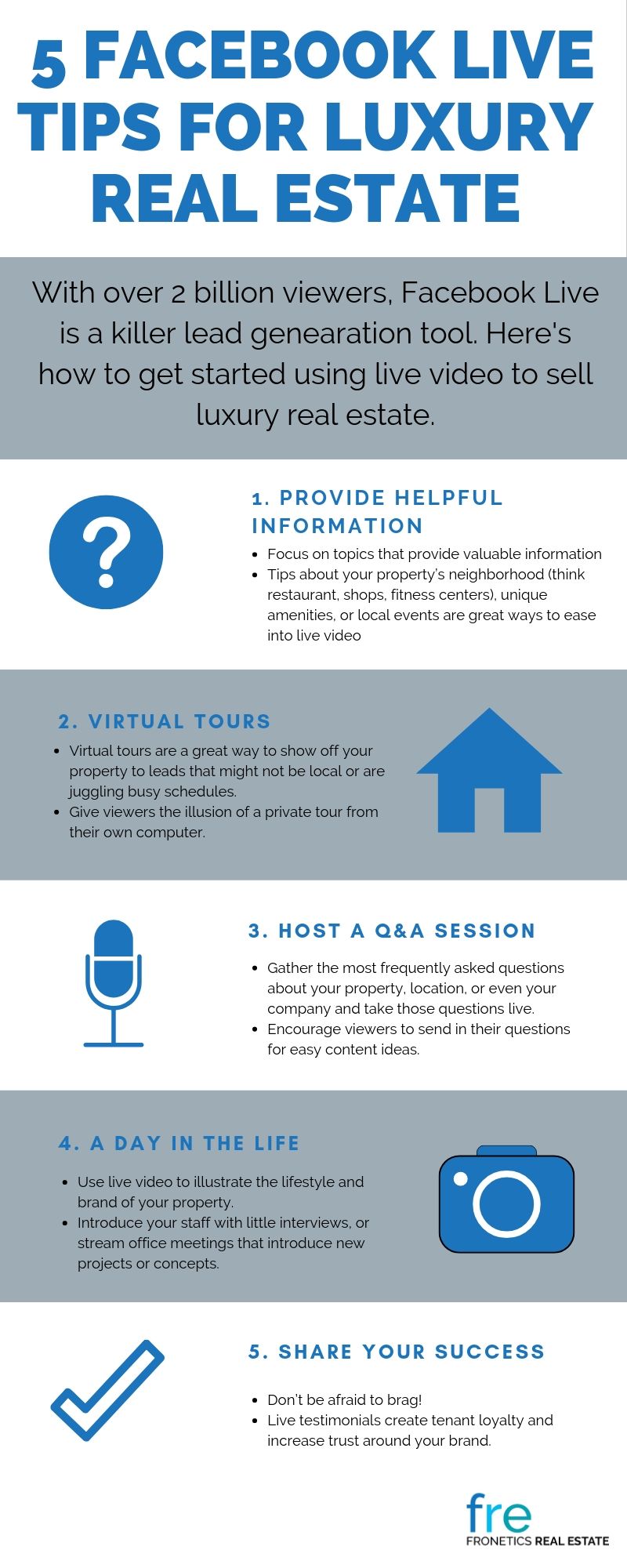
Infographic: 5 Tips for Using Facebook Live for Real Estate Brands
Live video marketing is one of the best and most cost-effective ways to grow brand awareness and generate leads. Here are five tips for using Facebook Live as part of your video marketing strategy.
Highlights:
- Facebook Live’s average daily views doubled year-over-year with over 2 billion users.
- Virtual tours on Facebook Live are a great way to show off your property to leads that might not be local or are juggling busy schedules.
- A live testimonial provides an opportunity for clients to talk about your property, creating customer loyalty and increased brand trust.
As a real estate marketer, you’re well aware of the popularity of video this year. Video is everywhere and the trend isn’t slowing down. Fifty-four percent of consumers actually want to see more video content from brands.
So while more real estate brands are increasing use of video in their digital marketing strategy, some are still hesitant to use live video options, like Facebook Live. I get it, going live is scary. With other video options, you can easily delete and start over. Live video gives you one shot to get it right. And not everyone will join your video when you start, so it’s key to iterate your main points several times without sounding redundant.
But don’t let your nerves stand in the way of trying Facebook Live. Initially launched in 2015, the live video streaming platform has soared in popularity by giving viewers an up-close and personal look at real estate brands. In just two years, Facebook Live’s average daily views doubled year-over-year with over 2 billion users and those who watch videos will spend three times as much time on a Live video than a produced one.
It’s easy to see with numbers like that how Facebook Live can help grow brand awareness and start generating leads. Here are 5 tips to get you using Facebook Live for your real estate brand.
Infographic: 5 tips for using Facebook Live for real estate brands
-
Provide helpful information
We talk a lot about the importance of high quality, valuable content and the same holds true for live video. Try to focus on topics that will provide valuable information for your viewers. Tips about your property’s neighborhood (think restaurant, shops, fitness centers), unique amenities, and local events let you ease into live video by covering topics that you’re comfortable with and knowledgeable about. And viewers will find them useful, too.
-
Virtual tours
They say a picture speaks a thousand words, so imagine what live video can do! Don’t just talk about the key features of your property — show your viewers. Virtual tours on Facebook Live are a great way to show off your property to leads that might not be local or are juggling busy schedules. Seeing your property in real time will give viewers the illusion of a private tour from their own computer.
-
Host a Q&A
Hosting a question and answer session is one of the easiest ways to get your feet wet with live video. Think about the most frequently asked questions about your property, your location, even your real estate brand and take those questions to Facebook Live. Don’t be afraid to start a Q&A–series where you address questions on a regular basis. Encourage viewers to send in their questions for easy content ideas.
-
Day in the life
Use live video to show the human side of your real estate brand. Introduce your staff with little interviews and stream office meetings that introduce new projects or concepts. This inside look shows who you are and what your brand stands for, which helps build trust in your company and your properties.
-
Tell your success stories
People love a good success story and if a recent buyer (or leasee) is willing to go on camera to rave about your property, you should jump at the opportunity. As a marketer, you know that customer testimonials serve to increase trust, so why not showcase your satisfied clients? A live testimonial provides an opportunity for clients to talk about your property, creating customer loyalty, and increased brand trust.
Final thoughts
Live video is an ideal way to establish your credentials and generate leads. With Facebook Live, real estate brands ca boost brand awareness, build trust, and increase engagement. Use these tips to make live video work for you. Need help getting started? You know where to find us.
Related posts:
- 3 Ways to Boost Your Real Estate Marketing with Video
- Infographic: Best Video Distribution Channels for Real Estate Marketing
- 6 Simple Tools for Creating Animated Real Estate Marketing Videos
Your search results for "Marketing automation"

5 Creative Ways to Use Instagram Stories for your Luxury Real Estate Brand
Luxury real estate brands are capitalizing on Instagram Stories to highlight property features and give followers an inside look at what sets them apart.
Highlights:
- With such a highly visual platform comes the challenge of standing out from other luxury real estate brands.
- Stories helps boost reach and engagement by giving users ways to engage with your content.
- Don’t be afraid to make your content pop through filters on your images and videos, use fun fonts and bold text, and create slideshows that break your stories into parts.
Instagram is a natural fit for real estate marketing. And with the growing popularity of Instagram Stories, marketers are increasingly using this feature to highlight their properties and luxury real estate brand. When implemented as a part of a robust digital marketing strategy, Instagram Stories is an ideal place to showcase your latest projects.
But with such a highly visual platform comes the challenge of standing out from other luxury real estate brands. If you want to generate leads, increase ROI, and ultimately close deals, you’ll need to think outside of the box.
Here are five creative ways to use Instagram Stories for your luxury real estate brand
1. Go behind the scenes
Because of the informal feel of Instagram Stories, it’s a great place to highlight your luxury real estate brand and give viewers a behind-the-scenes look at your property. This intimate view into what makes your brand unique helps build engagement and brand loyalty.
Some ideas to showcase your luxury real estate brand include:
- Highlight premier features of your property
- Snap a picture or short video at local restaurants, bars, and events by your property
- Upload an image of an office brainstorm or staff meeting
- Feature new marketing ideas or things your staff are working on
2. Engage
I recently read that Instagram algorithms can make organic reach difficult, which means that engagement can be a challenge. But Stories helps boost reach and engagement by giving users ways to interact with your content. Ask viewers a question or create a poll to encourage audiences to share thoughts with your brand. What’s your favorite feature in the new penthouse unit? What color should we paint our office door? What videos do you find most appealing. And when audiences respond to your questions or polls, make sure you re-engage with them.
3. Highlights
Looking to get more shelf life out of your Instagram Stories? Try using the Highlights tool.
“Instagram Stories Highlights can live permanently on your profile. They’re like curated collections of Instagram Stories that your followers — both old and new — can tap into and watch any time they like.
“And because of their prime location directly under your bio and above your Instagram feed, it’s the perfect place to direct followers to your most valuable and interesting content,” writes Benjamin Chacon for Later.com.
Highlights is a great tool for gathering several of your most engaged stories and blog posts, and organizing them by topic. For example, your luxury real estate brand can create different highlights for property features, neighborhood information, and office culture. Viewers can easily sort through your content based on their personal needs.
4. Be visual
56% of marketers said they use visuals in their content almost 100% of the time. Instagram called the feature “Stories” for a reason. Don’t be afraid to make your content pop through filters on your images and videos, use fun fonts and bold text, and create slideshows that break your stories into parts. Visual content has significantly higher engagement rates, so get your camera ready.
5. Luxury branding
Instagram Stories leverages two things today’s buyers love: beautiful images and engaging videos. The tool extends a brand’s audience, shows the ins and outs of what makes your brand unique and promotes engagement with your Stories, as well as your Instagram posts. All of these elements develop brand awareness and, hopefully, brand loyalty.
Final thoughts
I’ve heard some luxury real estate brands are hesitant to use Instagram Stories, because of the informal vibe of the tool, something that’s not usually synonymous with luxury real estate. But as Instagram continues to grow in popularity, it’s important for brands to follow their audiences.
Remember, Instagram Stories is just one part of your dynamic digital marketing strategy. Have fun with the tool, experiment with posts including videos and pictures, and see what followers engage with the most. You might be surprised how well your Stories perform.
Still hesitant about getting started? Let us help.
Related posts:
- Measure Social Media Success in Terms of Potential, not Dollar Amount
- How to Use Social Media Hashtags in Real Estate Marketing
- How to Use Instagram for Real Estate Marketing
Follow Us


