
Your search results for "Video marketing"

Top 5 Blogs for Real Estate Marketers
Blogs are an ideal source of knowledge and insights for real estate marketing professionals. Here are our favorite five blogs for real estate marketers to follow.
Highlights:
- Up-to-date knowledge is crucial for real estate marketers.
- Following the right blogs sets you up for success and keeps you aware of conversations in the industry.
- These five blogs for real estate marketers are our favorite sources of knowledge and insights.
Promoting your properties, growing your business, converting leads — it’s all about having the knowledge-base that shapes your strategies and solutions. There’s always something new to learn in real estate marketing. We think this makes it an incredibly exciting field — but we also know that it can be equally overwhelming.
If you know where to look, there’s a vibrant conversation going on among real estate marketers as an ever-growing field of ideas is being generated and discussed. We’ve compiled this list of our five favorite blogs for real estate marketers that we think you should be following, too. These are ideal places for information and ideas about overall best practices, social media use, writing effective content, and more.
5 blogs for real estate marketers
1. Propmodo Real Estate
Propmodo Real Estate is the place for cutting-edge insights into how technology is changing the way commercial real estate is acquired, managed, and used. This multimedia site follows people, practices, and tools that are shaping the business of real estate.
A few of our favorite posts include a discussion of the commercial real estate sector’s embrace of lease automation, and “Viral Marketing and Buzz Marketing: What is Better for Real Estate Business?”
2. BombBomb
Like Propmodo, BombBomb’s blog is real estate-specific and dedicated to building relationships through video to create more opportunities in email, text, and social media. It’s particularly strong on email marketing, which is still the most profitable form of marketing online.
We love what BombBomb has to say about the nuts and bolts aspects of real estate marketing, but they also have some great think pieces. For example, a recent post and podcast episode on “Trust, Neuroscience, and the Customer Experience” explored the neuroscience behind trusting relationships with clients, the nature of trust itself, and how to cultivate it.
3. HubSpot Marketing
HubSpot Marketing is a phenomenal resource for all content marketers, including real estate marketers. It covers everything you need to know to become a marketing whiz. Topics include SEO, blogging, social media, lead generation, email marketing, lead management, analytics, and more.
These experts in content marketing may not be writing specifically about real estate, but we have them on the list, since it’s worthwhile for real estate marketers to be aware of the larger ideas and solutions being discussed as it pertains to content marketing.
4. Geek Estate
A good choice for the tech-savvy marketer, Geek Estate focuses on what’s happening in real estate technology — for example, the changes happening with Zillow and Trulia. This is a great resource for being on the cutting-edge of upcoming trends.
Geek Estate is a private community of real estate technologists, innovators, and founders. Much of their content requires a subscription, and membership could be well worth your while. The blog has recently tackled the subject of “Uberizing Real Estate with Zillow Offers.”
5. Social Media Today
Like Hubspot, Social Media Today isn’t specifically focused on real estate. However, it’s a great go-to resource for all things social media, a crucial topic for real estate marketers. The blog frequently features insights from leaders in the field. And SMT’s team of influencers covers topics including social media developments, trending, social marketing, digital strategy, and content marketing.
SMT is a particularly good source of up-to-the-minute news from the social media and larger tech sector. The site keeps closely abreast of the latest developments, and keeps a roundup of social media updates separately archived for easy perusal.
Read them all or pick your favorite — you’ll benefit from increasing your knowledge.
Related Posts:
- Infographic: Real Estate Social Media Marketing Strategies
- A Visual Guide to Social Media Posting Frequency for Real Estate
- Video: Top Real Estate Marketing Trends 2019
Your search results for "Video marketing"
Infographic: Content Marketing Statistics Every Real Estate Marketer Should Know
It’s a given that if you’re a real estate marketer, content marketing should be a big part of your strategy. These are the content marketing statistics you should know about.
Real estate marketers should definitely be adding inbound marketing (content marketing) to your arsenal if you want to reach occupancy at your property. This doesn’t just mean the occasional blog or social media post. We’re talking a full range of content: video, high-value resources, etc.
We’ve pulled some of what we think are the most interesting content marketing statistics out there right now. Take a look at our infographic at the bottom of this post. We hope it will help spark some ideas for you own successful real estate marketing strategy.
Content marketing statistics — the big takeaways
This shouldn’t come as a surprise: the biggest thing you should be taking away from these statistics is that a well-documented, consistent content marketing strategy absolutely needs to be part of your overall business model.
Consider this: 90% of home buyers look online to find their next home, and 70% of them will be getting a sense for who you are through your online content. And by content, we don’t mean ads. we mean the inbound marketing materials like blog posts, videos, case studies, ebooks, and other content that you produce.
The content you create, curate, and share is the single best brand ambassador you have. Too many real estate marketers take a passive approach to their online reputations, rather than taking control of this goldmine of a resource. Content marketing is about using your expertise and what’s special about your brand to become a resource for your audience, and to generate leads by developing meaningful and lasting relationships with your prospects.
We’ve pulled together this infographic of content marketing statistics to give you a full picture of the value of content marketing when it comes to real estate.
Infographic: content marketing statistics for real estate marketers
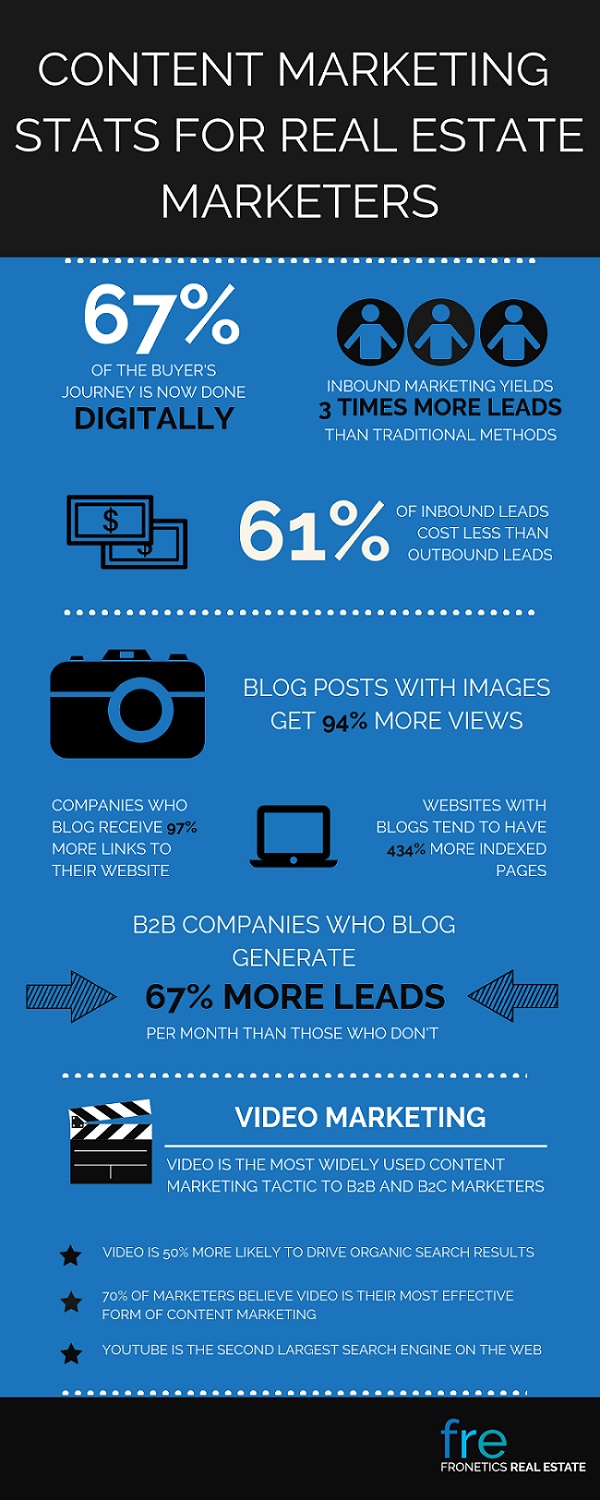
Data for the infographic came from REASS. (Made with Canva)
Related posts:
- 10 Quick Ways to Grow Brand Awareness
- 4 Types of Content You Need to Sell Real Estate (Besides Listings)
- How to Use Guest Posting as Part of Your Content Strategy

Your search results for "Video marketing"

4 Ways to Scare Away Real Estate Buyers with Content Marketing
If you’re committing these content marketing don’ts, you could scare away real estate buyers instead of attracting them.
As a real estate marketer, your job is to attract prospective buyers and tenants — so the last thing you want to do is misfire and scare people away. Yet, only a third of content marketers rate their content marketing strategies as extremely or very effective.
You want — and need — to be a voice that steers your company through a side of the business that is ever-changing. But even with the best intentions, you might be approaching your audience with the wrong tone, and that can cost you sales.
We’ve got just the plan to make sure your content is in check with what buyers and renters want. Here is our list of content marketing don’ts — the top four offenders that scare away real estate buyers.
4 content marketing don’ts
1) Don’t be generic.
Understand your audience and what makes them click. Real estate buyers want to feel a special connection with the property they buy. If your messaging isn’t personable and personalized, you run the risk of disengaging potential buyers.
Create content that is audience-focused, honing in on what your audience wants to read, not what you want to tell them. Do your research and position your content marketing strategy to focus on prospective buyers’ wants and goals — not yours.
2) Don’t try to sell, sell, sell.
Trying to pass off a blatant sales pitch as content will only hurt your content marketing efforts. Readers view content that isn’t sincere, informative, or authentic as disingenuous, and they’ll quickly turn away.
The same goes for content that’s filled with excessive keywords and multiple links meant to boost SEO results. Everything should be done in moderation so the potential buyer — and search engines — isn’t turned off.
Don’t expect your content marketing strategy to result immediately in increased dollars. Building rapport with your target audience takes time with an often-delayed payout.
3) Don’t sacrifice quality.
If your content is shoddy and low quality, potential buyers won’t bother with it. By and large, your prospects value quality, consuming content that offers value and is relevant to their needs and interest in private or commercial real estate.
Rather than publishing many low-quality blog posts, stellar content that stands out will go a long way in improving the buyer’s perception of your property. And adding a variety of media (e.g., photos, videos, infographics) to posts contributes to their value and boosts credibility. Video is an especially powerful medium in real estate marketing. Images and videos take extra investment, but they go a long way in helping the buyer visualize themselves in a property.
4) Don’t go unplanned.
Ensure your content is relevant by documenting a strategy, following it, and adjusting it as needed. An editorial calendar is a great place to start.
Brainstorm ideas for content with colleagues and buyers. Document your goals and methods, and create a plan for attaining them to give your marketing plan organizational clarity. Consistency is king — haphazard content marketing won’t get you anywhere.
Related posts:
- Start Your Property’s Social Media Program in Six Steps
- 6 Marketing Tasks Real Estate Marketers Can Outsource
- Social Media Can Be a Strategic Weapon in Real Estate Marketing
Your search results for "Video marketing"

4 Steps to Building a Successful DIY Content Marketing Strategy for Real Estate
Looking to DIY a content marketing strategy? Get started with these steps.
Are you trying to create a content marketing strategy for your property but don’t know where to begin? Even the language around content marketing can seem foreign to newcomers.
Setting your content marketing strategy is a crucial first step in trying to reach your target buyers or tenants. Before you begin writing blogs, creating video content, and posting tweets, you need to set goals.
A content marketing strategy outlines the methods by which you will target, reach, and engage potential buyers. Here are four steps to creating a successful foundation if you’re planning to begin a DIY content marketing strategy.
Steps to building a DIY content marketing strategy
1) Identify your buyer persona(s).
Trying to write compelling content for an unidentified audience is like taking a shot in the dark. Knowing who your ideal buyer or tenant is allows you to create content that is informative, educational, and entertaining to that specific person.
The more detailed you can be with your buyer persona(s), the more specific and effective your content can become. The personal connection is particularly crucial for real estate buyers, and understanding your target audience is key to making that connection.
2) Define goals and objectives.
Your content goals should be a direct reflection of your business goals. What do you want your content marketing efforts to accomplish for your company?
Top marketing goals for content marketers include converting contacts/leads to sales, growing website traffic, and increasing revenue. Make sure you include short-term and long-term goals and that you frequently refer back to these goals to make sure your strategy is on track.
3) Develop and distribute content.
Once you have identified your audience and defined your content goals, you can begin to educate yourself about the distribution platforms that will work best for introducing buyers to your property.
Let’s face it: Social media is not a one-size-fits-all solution. It’s imperative you know not only what to post, but where to post it. Buyers and renters of different demographics use social media differently. You’ll need to determine what platforms your target buyers are using and how to reach them effectively.
4) Put your knowledge to work.
Once you have worked through the initial steps of planning a successful social media strategy, the real fun begins. It’s time to start pushing valuable, effective content out to potential buyers.
Just remember that your strategy should be fluid so you can adjust it as necessary. Especially if you are selling/renting a multi-unit property, you’ll have to change your messaging to move different units (i.e. penthouses vs. smaller units). But even if you’re not, buyers and social platforms change with time, so keep refining your strategy as you go.
Related posts:
- 4 Ways to Scare Away Real Estate Buyers with Content Marketing
- 6 Marketing Tasks Real Estate Marketers Can Outsource
- Social Media Can Be a Strategic Weapon in Real Estate Marketing
<>
Your search results for "Video marketing"

3 Tips for Marketing to Millennial Real Estate Buyers
Home buyers are getting younger. Is your marketing strategy ready to meet the needs of millennial real estate buyers?
Consider this: more than a third of all home buyers came of age in the digital age. That’s right—millennials, those aged 36 and younger, now make up 34% of home buyers, which is the largest chunk of any generation buying homes right now.
These digital natives have a buying process that’s completely foreign to older generations, which means “traditional” marketing tactics won’t cut it when it comes to appealing to this demographic. Adjusting your strategy to resonate with millennials makes sense not just because it helps you reach this segment of the market, but also because it keeps you better positioned for the future of real estate marketing.
These three tips will help you adjust your strategy to market to millennial real estate buyers.
1) Be ready to guide them through the process
Millennials get a lot of bad press, as a generation that requires constant coddling and hand-holding. But to be fair, these young home-buyers are new to purchasing real estate—the vast majority (66%) of buyers ages 36 and under are first time home-buyers.
Buying a home is a complicated process, and millennials are looking for agents who will take the time to help guide them through the process. What does this mean for your marketing strategy? Placester’s Carolyn Berk suggests that “because guidance is so important to millennials, your marketing should emphasize your dedication to assisting customers every step of the way.”
This means offering resources and strategies rather than simply promoting available properties. For example, an eBook that guides first-time home buyers through the process is a great way to demonstrate your knowledge and commitment to supporting your clients through the buyer’s journey.
2) Help millennial real estate buyers save money
More than previous generations, millennials are saddled with student loan debt and often rely on sources other than just savings to finance their down payments. Simply put, they are looking to save at every opportunity.
Once again, content is your best bet for demonstrating to millennial real estate buyers that you are there to help them save money. Blog posts, testimonials, and case studies should detail your expertise in getting your clients the best possible deal. “Small things, like helping with contract negotiations or mortgage lender references, can go a long way with millennial buyers,” says Berk.
3) Go digital
This one probably seems obvious, but you’d be surprised at how many real estate professionals neglect their digital marketing presence. From social media to your website, marketing online is no longer optional, it’s expected. Millennial real estate buyers are heavily using the internet during their search and buying process, and your marketing strategy needs to be ready to meet them online.
First off, your SEO (search engine optimization) is key—your content needs to be readily available to potential buyers entering relevant search queries. “Aligning the content in your website to keywords that millennials use to search for homes in your region will help you pop up in search listings,” suggests Berk.
Your social media presence is also important. Millennials are checking Facebook, Twitter, Instagram, and Snapchat frequently throughout the day, and they should be finding your content. Take advantage of these visual media to promote your properties with photo and video content.
Marketing to millennial real estate buyers makes sense for your overall marketing strategy and helps keep your brand relevant and ready to adapt to the future.
Related posts:
- 5 Tips for Building a Successful Real Estate Social Media Marketing Program
- Real Estate Firm Grows Sales by 300% through Content Marketing
- Must-Know Social Media Strategies for Real Estate
Follow Us


