
Your search results for "Social media"

Wellness Amenities are the Biggest Trend in Luxury Real Estate
The latest trend in luxury real estate focuses on peace and tranquility. Here’s why wellness amenities, like meditation gardens and yoga decks, are growing in popularity.
Highlights:
- Modern luxury residents are trending away from the traditional flashy displays of wealth, and toward the peace and tranquility of wellness amenities.
- Luxury condo residents are just as likely to look for meditation gardens and yoga studios as gyms and on-site spas.
- Lush plantings, meditation studios, and sky-lit seating areas attract residents and require very little maintenance because of their simple, inherent beauty.
When most people think about luxury real estate, extravagance comes to mind: car elevators, helicopter pads, two-story gyms, and fine–dining restaurants inside glassy residential towers. However, modern luxury residents are trending in a different direction, away from the traditional flashy displays of wealth, and toward the peace and tranquility of wellness amenities.
The Rise of Luxury Wellness Amenities
Personal wellness is a cultural trend on the rise. Now, that focus on the soul-body-mind connection has also reached luxury residential communities across both the United States and the globe. While private theaters and state–of–the–art lobbies are still a big part of the equation, we are seeing increased demand for amenities that promote tranquility.
These days, luxury condo residents are just as likely to look for meditation gardens and yoga studios as gyms and on-site spas. They treat peace of mind as a precious commodity — and luxury residential communities have been racing to adapt to the change.
Some of the biggest names in luxury real estate are leading the way:
Providing Tranquility and Communion with Nature
In Hallandale Beach, Fla., 2000 Ocean has created a tranquility garden where residents can take a walk or relax in their very own lemon tree grove. At 1030 Kings in West Hollywood, an outdoor yoga deck has been constructed to offer a breathtaking place to breathe and unwind. And, in New York City, One Manhattan Square recently opened one of the largest private parks in the city, reserved exclusively for residents and their guests.
Using the Space You Have to Create Luxury Wellness
An interesting aspect of this new trend is that buildings don’t necessarily need access to large outdoor areas. You may not have an expansive courtyard or an open lot nearby to transform into a tranquility park. Or, perhaps, your outdoor areas are already dedicated to family-friendly amenities like a dog park or playground. The good news is you can use existing space to include wellness amenities — although not every community has the resources to go as far as Gramercy Square in Manhattan.
Gramercy Square has forgone the idea of the open-air retreat and built an 18,000-square-foot subterranean amenities club with a sky-lit pool, yoga room, and studio staffed by reps from a Manhattan meditation center. Other high-rise luxury buildings are using their upper floors and roof access to provide outdoor serenity, including features such as private, sunlit spas and planter gardens.
Luxury Real Estate and Wellness Amenities
If you are developing or managing a luxury condo building, this trend cannot be ignored. Not only are today’s luxury residents clamoring to live in buildings that provide wellness amenities, but these amenities often come with very reasonable overhead. Lush plantings, meditation studios, and sky-lit seating areas attract residents and require very little maintenance because of their simple, inherent beauty.
Are you raising awareness around your wellness amenities? If not, let us help.
Related posts:
- Using Content Marketing to Market and Sell Luxury Real Estate
- The Role of Social Media in Luxury Real Estate Marketing
- 5 Luxury Real Estate Brands that Use Content Marketing to Sell Property

Your search results for "Social media"

The Sweet Spot of Advertising: Microtargeting and Real Estate
With microtargeting, you can personalize the messaging to ensure it reaches the right audience, in the right place, at the right time.
In an age when customers are increasingly empowered to select how, when, and where to view content, deluging them with off-target ads that do not meet their needs is a waste of effort. Cue microtargeting. With microtargeting, you can personalize the messaging and ensure it reaches just the right audience.
What is microtargeting?
Also known as micro-niche targeting, microtargeting is a marketing technique that relies on consumer data and demographics to identify the interests of specific people. That information is then used to influence their actions and spur their interest in a company’s products or services. The primary goal is to understand the target audience and deliver marketing messages to them through their preferred communication channels.
Real estate and microtargeting
By using collated data, microtargeting helps real estate firms get the right message, in front of the right audience, at the right time. For example, when advertising a property, the right audience would not be high school students, so targeting them is a waste of time. With microtargeting, real estate firms can segment their potential customers based on, for example, age, income range, and family size. Who can afford your property? Does it appeal to empty nesters, families, or young professionals? Now, you can decide who you should target and deliver a personalized, valuable message based on what you know about your customer base.
Microtargeting with geolocation and geo-fencing
Another feature of micro-targeting is the ability to share the right message — in the right place: geomarketing. A marketing strategy built on geomarketing draws on geographic information for successful delivery. Combined with other market segments, it can effectively help you reach the audience that matters to your business. There are two types of geomarketing:
- Geolocation is data about device location. A device´s location is captured by an IP address, GPS, Bluetooth, and Wi-Fi. Geolocation marketing reaches its full potential when paired with consumer behavior. This way, real estate firms can tailor messages to people in a particular location based on their preferences. For example, data collected may show people from a specific area prefer certain types of buildings. Armed with this information, you can design a geolocation campaign that appeals to and reaches those same people.
- Geofencing is dependent on a person’s mobility — like stepping into a new area. Unlike geolocation, geofencing lets you fire a message when a new person crosses a predefined, virtual perimeter. Geofencing helps real estate firms send a “right here, right now” message. For example, the ad may announce the presence of a real estate sales center and accompanying offers. Again, you’ve reached a person with potential interest in buying or renting in the area.
In summary, microtargeting ensures you get the most out of your marketing efforts.
Related posts:
- Using Messaging Platforms for Real Estate to Deliver Content
- Good Real Estate Marketing Gets Personal
- Social Media Trends for 2018 Real Estate Marketers Need to Know

Your search results for "Social media"

Infographic: Content Marketing Statistics Every Real Estate Marketer Should Know
It’s a given that if you’re a real estate marketer, content marketing should be a big part of your strategy. These are the content marketing statistics you should know about.
Real estate marketers should definitely be adding inbound marketing (content marketing) to your arsenal if you want to reach occupancy at your property. This doesn’t just mean the occasional blog or social media post. We’re talking a full range of content: video, high-value resources, etc.
We’ve pulled some of what we think are the most interesting content marketing statistics out there right now. Take a look at our infographic at the bottom of this post. We hope it will help spark some ideas for you own successful real estate marketing strategy.
Content marketing statistics — the big takeaways
This shouldn’t come as a surprise: the biggest thing you should be taking away from these statistics is that a well-documented, consistent content marketing strategy absolutely needs to be part of your overall business model.
Consider this: 90% of home buyers look online to find their next home, and 70% of them will be getting a sense for who you are through your online content. And by content, we don’t mean ads. we mean the inbound marketing materials like blog posts, videos, case studies, ebooks, and other content that you produce.
The content you create, curate, and share is the single best brand ambassador you have. Too many real estate marketers take a passive approach to their online reputations, rather than taking control of this goldmine of a resource. Content marketing is about using your expertise and what’s special about your brand to become a resource for your audience, and to generate leads by developing meaningful and lasting relationships with your prospects.
We’ve pulled together this infographic of content marketing statistics to give you a full picture of the value of content marketing when it comes to real estate.
Infographic: content marketing statistics for real estate marketers
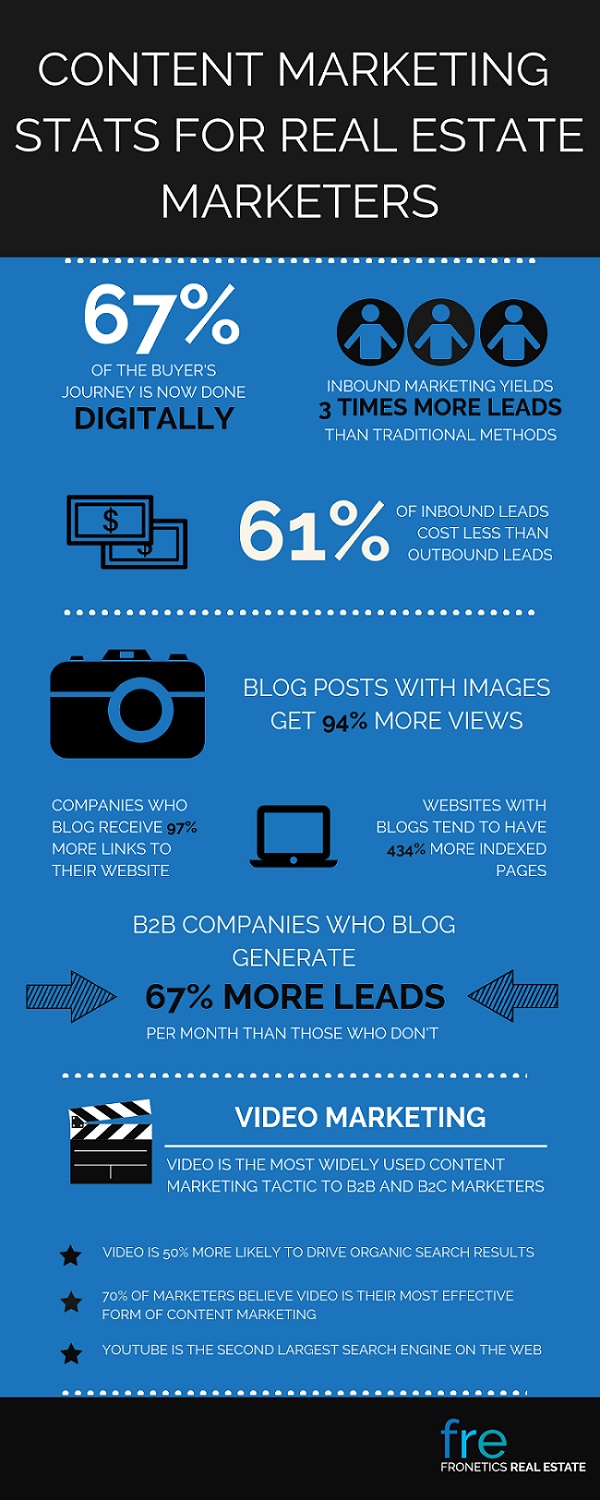
Data for the infographic came from REASS. (Made with Canva)
Related posts:
- 10 Quick Ways to Grow Brand Awareness
- 4 Types of Content You Need to Sell Real Estate (Besides Listings)
- How to Use Guest Posting as Part of Your Content Strategy
Your search results for "Social media"

How Virtual Tours are Helping Real Estate Marketers Sell Properties
Virtual tours are making waves in the real estate industry as software takes staging and online tours to the next level
With online searches accounting for more than two thirds of the time that buyers devote to finding the right property, it’s essential for real estate marketers to adjust their efforts accordingly. But it takes more than a robust website and informative blog posts to get your properties sold.
The latest trend among digital marketers: virtual tours that offer prospects an actual inside look at your real estate listings from wherever they happen to be.
Virtual tours: the basics
Utilizing the newest technology, potential buyers are given the opportunity to leisurely explore your listing without ever stepping foot inside. Leads can take their time and truly get a sense of what it might be like to call your property home. The digital tool gives developers an opportunity to save money, time, and creates an opportunity for exponentially larger reach than traditional tours.
Why real estate marketers need to be creating virtual tours
Convenience
Purchasing a piece of real estate is a big decision and not one that is usually made overnight. Make searching for your properties convenient to potential buyers by showing them exactly what they can expect when they walk through the door.
Here’s sound advice from Quicken Loans:
“While there are a lot of companies and software out there that can help you create the most technologically-advanced virtual tour on the market, your main objective should be to create an online experience that is easy to navigate and does a good job showing off your home.”
Cost effective
Virtual tours can be elaborate 3D tours done by a production company or as simple as shooting video on your cellphone. Using available resources, like your mobile phone, allows real estate marketers to get their properties in front of prospects without a huge financial investment.
Stay ahead of the competition
Buyers who view properties with virtual tours are two times more likely to set up an actual tour. With numbers like that, it’s easy to see why real estate marketers need virtual tours to stay ahead of their competitors. Buyers have the opportunity to engage with your property, while learning more about your brand.
Virtual tours have exponential reach and longevity
As a marketer, you know that longevity is key in creating content. Virtual tours are a cost-effective, time–saving tool that can showcase your property for as long as it is available. Get the most out of your virtual tour by posting it to your website, write a tour-based blog post, and share it social media. The more visible your virtual tour is to prospects, the more organic reach you’ll gain. Reply to comments (positive and negative) and answer any questions that prospects may have. The more engagement a brand has with leads, the closer you are to closing a deal.
Final thoughts
Virtual tours are rapidly revolutionizing the real estate industry. It allows potential buyers to view your listing at their own convenience, anytime, anywhere. Have you tried posting a virtual tour of your property? We’d love to hear about your experience.
Related posts:
- Infographic: 5 Tips for Using Facebook Live for Real Estate Brands
- 5 Real Estate Marketing Strategies for 2019
- Using Online Virtual Tours to Sell and Lease Property

Your search results for "Social media"

6 Luxury Real Estate Trends to Keep an Eye On
From security and privacy measures to wellness amenities, here are six luxury real estate trends for marketers to take note of.
Smart home technology, high-level amenities, and emphasis on security — those are just some of the luxury real estate trends that will shape the market this year and beyond.
Here’s what you need to know, boiled down to a 5-minute read.
Overview of the luxury real estate market trends in Boston
The luxury real estate market is changing rapidly due to technology that allows for increased consumer mobility. More and more buyers are able to tour homes virtually, giving them access to properties around the clock. Affluent buyers have started to expand the ownership of property beyond their historical locations, branching into new areas and even across state lines.
And let’s not forgot about millennials. While Baby Boomers still possess more current wealth, younger buyers continue to grow tremendous spending potential. That is why they have become a crucial market segment for luxury real estate agents.
Luxury real estate trends to look for
Similar to other industries, the real estate world is driven by demand. In fact, the nationwide average selling price for luxury properties increased towards the end of 2018 despite increased mortgage rates. But several factors remain constant: the trends and features that come with high-end homes. Here are the most popular trends.
1. Smart homes
Connectivity and convenience go hand in hand in luxury real estate. A home equipped with the latest in digital technology is a statement of wealth and modernity. The smart home does not only benefit the environment but deliver financial benefits to the owner as well. For all the developments with smart locks, smart thermostats, and more, we are only seeing the beginning of the smart home revolution.
2. Advanced security
The affluent home buyers spare no expense to ensure their lives and items remain secure. From hiring architects who conceal houses to scraping their properties off the grid, this market segment invests heavily in security. And more advanced features and products will hit the market in the next few months.
3. Focus on privacy
In addition to security, buyers at this price point also value privacy — and they are willing to spend big bucks to achieve that sense of complete seclusion. If you acquire a home for $5 million, you do not expect it to be visible to neighbors or have anyone from the street walk to your front door. Buyers want homes with gates, hedges, and walls, but not that big chain link fence. Aesthetically pleasing privacy features add a different layer to it.
4. Guest suites
Most luxury buyers are embracing the trend of guest suites. The suite does not have to be detached. It can sit right off the garage downstairs or be equipped with an en-suite bathroom to be used by visiting family or friends, as well as the live-in maid or nanny. Buyers also prefer extra space and rooms for home offices, workout rooms, or a gym.
5. Swimming pools, particularly smaller ones
A pool is one of the key expectations in any luxury property. However, few people want the pool to take up the entire backyard. Instead, home buyers may opt for a smaller plunge pool or a “glorified jacuzzi.” With the construction of big homes on small lots, the trend makes perfect sense.
6. Amenity-rich homes
Customized libraries, wine cellars, yoga roof decks, serenity spaces — affluent buyers have moved beyond private gyms. And developers are responding accordingly, adding wellness amenities to new projects. Eco-friendly features have also begun to play a more significant role with buyers specifically searching for LEED–certified buildings.
What trends have you noticed in luxury real estate?
Related posts:
- Using Content Marketing to Market and Sell Luxury Real Estate
- The Role of Social Media in Luxury Real Estate Marketing
- 5 Luxury Real Estate Brands that Use Content Marketing to Sell Property
Follow Us


